by Ralph Nichols

Burien long has wanted an interchange connecting State Route 518 with Des Moines Memorial Drive to improve access to businesses that, city officials hope, will move into the Northeast Redevelopment Area (NERA).

Now an interchange from SR 509 to NERA, located under flight paths from Sea-Tac International Airport north to S. 138th St., is also under consideration.

Burien City Manager Mike Martin said recently that any interchange on SR 509 would provide access to the Northeast Redevelopment Area.

“No one has agreed to a 509 interchange,” Martin stressed. “This is just a concept. There are only draft plans (at the city) now.” And it’s not on any to-do list at the Washington State Department of Transportation or the Puget Sound Regional Council.

Both the Port of Seattle, which owns much of the property in the area, and the city anticipate business and commercial development here within a few years. Business parks, technology and light industry, and auto sales – perhaps an auto mall, to which dealers now on 1st Ave. S. would relocate, all could play a role in the economic development of the NERA.

“This property has been blighted by the second runway and now the third runway,” Martin said. “What we are doing (by planning for a new interchange) is trying to make NERA more accessible so we can put this property back into use.”

He added that the area “is large enough to accommodate small box stores and retailers of construction materials.” But the market will determine what kind of businesses locate here. In the meantime, “we need to prepare the area to be ready for certain types of activities.”

The cost of a new interchange, including planning, design and construction, has yet to be determined, Martin said. Most of the financing probably would come from federal and state funds.

So far, he’s talked with local state legislators, “who have received the idea very warmly.”

Nov ’09
11
2:00 pm

A special Veteran’s Day Commemoration is coming to the SeaTac Community Center on Wednesday, Nov. 11th to celebrate both the history of Des Moines Memorial Drive as well as honor women who have served their country.

Here are the details:

WHAT: Veteran’s Day Commemoration: Women in Service

WHO:  Scheduled speakers include:

  • Kitty Milne, Highline Historical Society
  • Congressman Adam Smith, 8th District
  • Peggy Caudill, Intertribal Warrior Society (former Nurse in the U.S. Army)
  • Carol Reed, American Legion (former Sergeant in the U.S. Marines)
  • Kit Ledbetter, City of SeaTac

WHEN: Wednesday, November 11th from 2:00 p.m. – 3:00 p.m.

WHERE: SeaTac Community Center, located at 13735 24th Avenue South SeaTac, WA  98168; (206) 973-4680

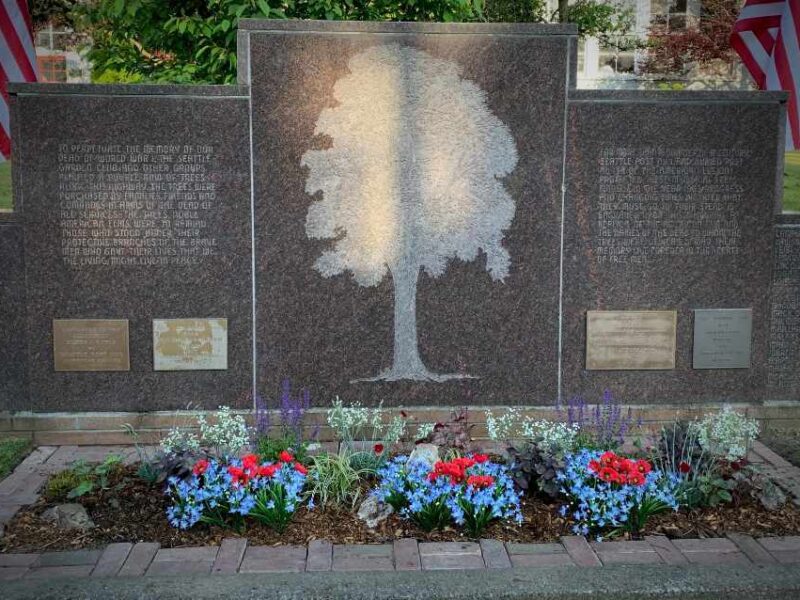
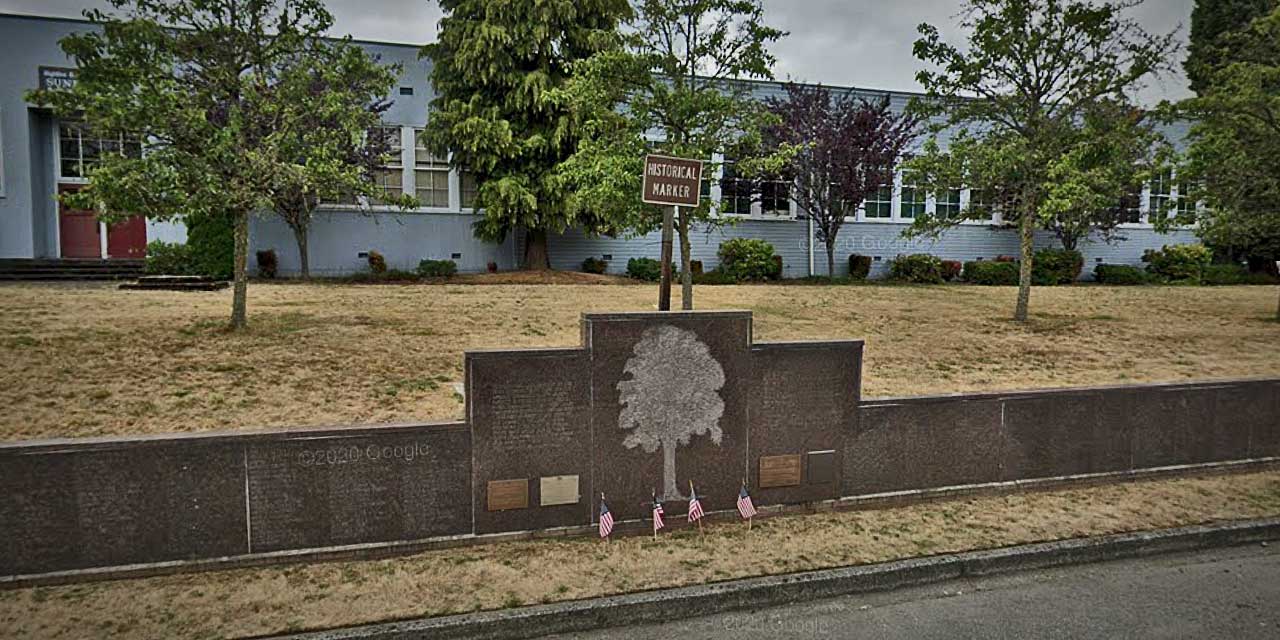
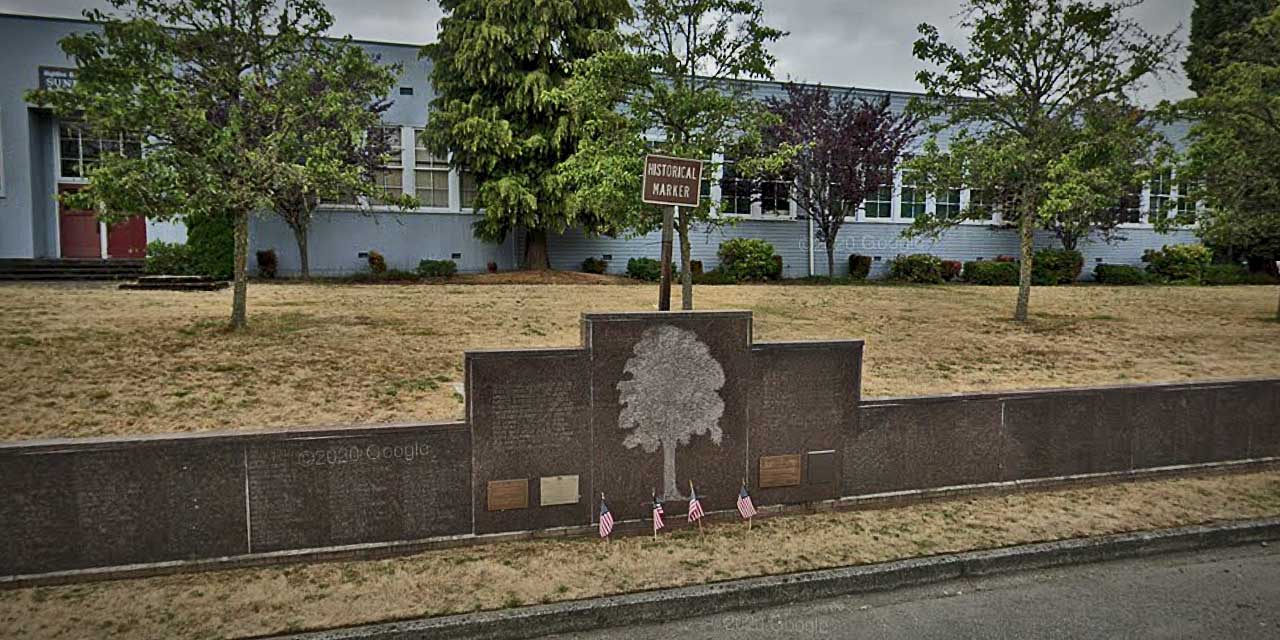
INFO: The Des Moines Memorial Drive – The Living Road of Remembrance, is an eight-mile stretch of road through the cities of Des Moines, Burien, SeaTac and the Boulevard Park area of unincorporated King County. The Drive was completed in 1922 with the planting of 1,100 American elm trees, each commemorating an individual from Washington state who died in World War I. On November 11, 1963 a memorial wall commemorating the history of the Drive was dedicated at Sunnydale School in Burien.

ABOUT: The Des Moines Memorial Drive Committee, a citizen advisory committee created in 2000, developed a plan for restoring and enhancing the memorial road. The plan outlines how jurisdictions will implement enhancement efforts as part of future road improvement projects. For more information, visit www.roadofremembrance.org.

From their press release:

Community members are invited on Veterans Day, Wednesday, November 11, to celebrate a local historic road which honors the fallen soldiers of World War I. In addition to highlighting the history of Des Moines Memorial Drive, the event this year will honor women who served in the military during World War I and over the decades since that conflict. The event will be held at 2:00pm at SeaTac Community Center, located at 13735 – 24th Avenue South, in SeaTac.

Des Moines Memorial Drive is an eight-mile stretch of road which winds through the Boulevard Park area of unincorporated King County, SeaTac, Burien and Des Moines. In 1922 the project was completed with the planting of 1,100 American elm trees to line the roadway as a “living” memorial to those who lost their lives in World War I. Over time, the impacts of disease, radical pruning and utility installations have decimated most of the elms. Forty-six years ago on November 11, 1963, a memorial wall commemorating the history of the Drive was dedicated.

While held on Veterans Day, the event will also mark the day formerly known as Armistice Day, which is the anniversary of the official end of World War I (November 11, 1918). Elected officials including Congressman Adam Smith and local mayors will honor the historical nature of Des Moines Memorial Drive and the special role that women played in the country’s military history.

An Advisory Committee was created in 2000 with representation from King County, local cities, other interested public agencies, and concerned citizens to develop a coordinated vision for restoring and maintaining the living memorial. The resulting plan, which has been accepted by all the participating jurisdictions, outlines how the local cities can also incorporate similar memorial elements in their future road improvement projects along the Drive.

Des Moines Memorial Drive has national significance on several accounts:

  1. It is the earliest planned “living road of remembrance.”
  2. It is the only “living road of remembrance” that uses Elm trees.
  3. At 10 miles, it is the longest “living road of remembrance.

In addition to the celebratory event, interpretive displays prepared by the Highline Historical Society will be available for public viewing. Local veterans and school groups are expected to take part in the event that will also recognize the ongoing cooperative efforts of the cities and county. learn more about Des Moines Memorial Drive, visit www.roadofremembrance.org.

Sad news today from King County Miller/Walker Creek Basin Steward Dennis Clark – remember the two beavers who made their home (and subsequent dam) in a pond near Des Moines Memorial Drive in Burien?

They were euthanized last week.

Previously, we asked Readers what the city should do in regards to the creatures, and the results were:

  • 65% voted “Leave them alone, and just deal with the consequences”
  • 33% said “Re-locate them safely in the wild somewhere else
  • 2% said “Just kill the dam things before they flood downtown!”

So much for our new campaign to hire a “Beaver Whisperer” to psychically tell them to leave. Oh well.

Here’s an email we received from Dennis on Wednesday (Oct. 21st):

Scott,

I’m sorry to report that last week the beavers were euthanized.

We relied on the expertise of the wildlife biologists at the US Department of Agriculture-Wildlife Services Branch to make a determination about whether to relocate or euthanize the animals.  Their staff were very concerned about the transmission of disease (both from our animals to other animals and vice versa) and I suspect that was what led to euthanizing the beavers.  Their trained staff carried out the removal on behalf of the City.

One of Burien's two beavers that was euthanized last week.

As I mentioned to you before, the key problem was that keeping the beavers would raise the average water level in the wetland as they built up their dams and/or blocked the culverts under Des Moines Memorial Drive.  Beaver behavior (not unlike that of the other dam-builders, we humans) is to expand their territory.  If they were allowed to do this, there would be little room for the wetland to hold more water before it began to flood the septic drain field and driveways of one or more neighbors.  An even higher water level would threaten both homes and the integrity of Des Moines Memorial Drive itself.

This last Saturday, October 17, provided a dramatic example of how the wetland responds to rain.  From 8 a.m. to Noon — a mere four hour period — I observed the wetland water level increase by over one foot! Because the beavers had been removed and the water level lowered the previous day, the wetland was able to handle this rise in the water level, which still came just to the level of the nearest neighbor’s driveway.

Fluctuation of the level of the wetland IS a good thing because that is a sign that the wetland is storing water during storms.  If the wetland didn’t exist (and the City should be recognized for conserving it through purchase back in 2005) or if there were larger culverts under Des Moines Memorial Drive, the water would otherwise rush downstream, potentially flooding private and public property in Burien and Normandy Park and damaging stream ecology with higher flows (scouring spawning gravel, causing erosion, blowing fish and leaf debris downstream).

I was excited when the beavers showed up this spring because the healthiest streams do include beaver in their ecosystems.  I researched whether there were techniques we could apply that would allow us to keep the beavers as neighbors without flooding the human neighbors or undermining Des Moines Memorial Drive.  I observed their interaction with the wetland and talked with the neighbors to learn from them.

And I had hours to think on all of this while chest-deep in water each time I cleared out the culverts the beavers had blocked!  By the end of the summer, both I and City staff reluctantly concluded that there was not room for beavers in this urbanized stream.

It was a sad outcome for me personally because I came to respect the energy and dam-building skill of these remarkable rodents in addition to appreciating their ecological value.  However, I was also reminded each time I had to unplug the culverts or adjust the height of their dams that there’s a reasons we term beavers WILDLIFE.  They have their own needs and aren’t amenable to being “managed.”  Unfortunately, we could not accommodate their needs in this situation.

- Dennis

So…what do YOU think of the fact that these two dams beavers are now sleepin’ wit’ da fishes?

Please take our poll below, and/or leave a Comment…

Do you think that Burien's two beavers should've been euthanized?

View Results

Loading ... Loading ...

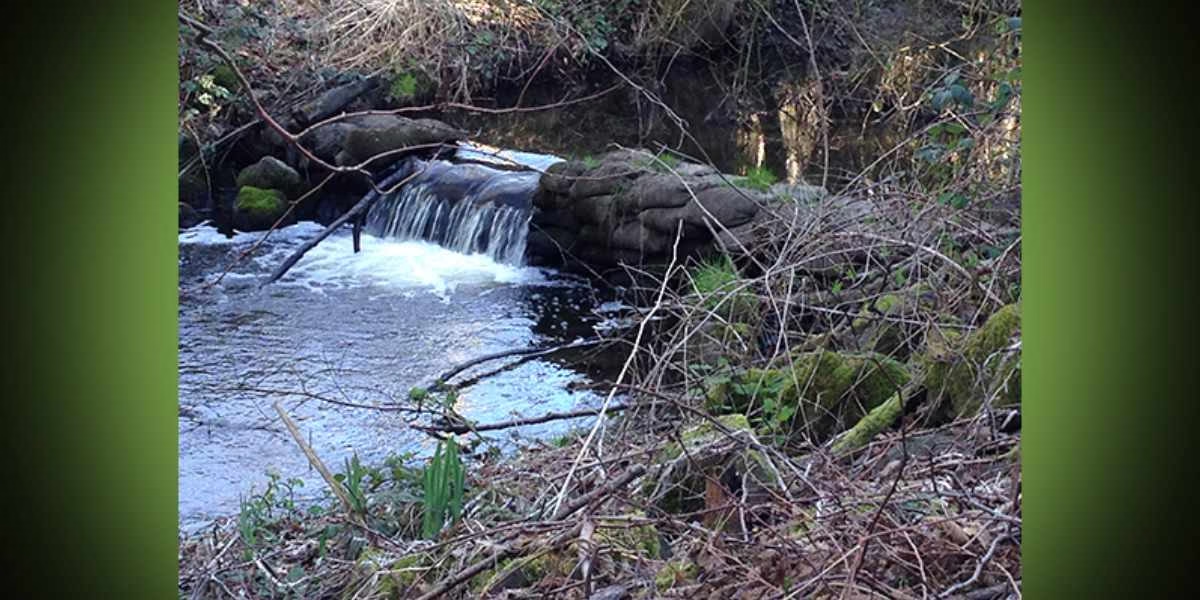
We’ve covered this before, but since then our friend Dennis Clark sent us these photos so we just had to do an update – Burien has its own, functioning, dam (building) beaver family living in Walker Creek near Des Moines Memorial Drive; the city may have to relocate these animals soon:

This is the beaver's dam home. The yardstick is used (by humans) to monitor water levels, which are affected by the beaver's dam.

This is a beaver in its home. Any dam questions?

A recent posting in our forums from Sue (one of the beaver’s neighbors) is worth a note as well, expressing her concern for the safety of the animals if they’re relocated:

“We have recently had a couple of beavers decide to move into our pond area off of Desmoines Memorial Drive.

But, because they’re affecting the culverts under the roadway, the city may relocate them to avoid having to pay to keep them in their protected habitat.

We’ve had a guy from King County out a couple of times, and they’ve lowered the levels of the dams and cleared out the culverts.

They have warned us that if the beavers keep being beavers, that they will have to be relocated.

I’m not sure if anyone knows this but the mortality rate of a beaver, once relocated, is very slim. Please help us keep our wild life!!

According to King County’s Miller/Walker Creek Basin Steward Dennis Clark:

As for the beavers, they are still there doing their dam beaver thing. I now TRULY understand the term “busy as a beaver.”

I’m the “King County guy” that Sue refers to, of course. Her characterization of the issue isn’t entirely accurate, unfortunately.

Right now, the City of Burien is reviewing how to manage the beavers. While it’s exciting to have the beavers and they provide ecological benefits, they also in their dam way cause some big drainage problems. The key challenge is keeping the culverts under Des Moines Memorial Drive free-flowing so water doesn’t back up and flood over the road and the neighbors to the north.

What makes the decision for the City particularly hard is that the costs of different options vary considerably and the outcomes of the more costly options are uncertain. WILDlife is unpredictable in its response to our efforts to “manage” it.

At this point, I don’t know when the City will make its decision.

previously, Clark has also written on his blog:

Per yesterday’s entry, further work was needed to clear the Walker Creek culverts under Des Moines Memorial Drive in Burien. Overnight, the beavers were as busy as — well, beavers — and they had partly replugged one culvert and rebuilt a dam.

My clearing efforts did raise the water level flowing downstream by 2 p.m. Friday. As occurred yesterday, shortly after I concluded my work, the water flowing downstream became clear. Any longer-lasting turbidity downstream likely is due to sediment in the stream being mobilized by the temporarily higher flows. Reports from people in Normandy Park confirm that turbidity decreases once the flows do.

This clearing of the culverts and the attendant flow fluctuations downstream hopefully should occur no longer than for a few days next week. This manipulation of the stream is not desirable and is only occurring as a byproduct of efforts to protect public property (a major road) and private property (a septic drain field).

So…what do YOU think the city should do with these beavers? Please take our poll, or leave a Comment below…

What should the city of Burien do with its beavers?

View Results

Loading ... Loading ...